

2026 Toyota RAV4 vs. 2026 Honda CR-V: Which SUV Rules the Pacific Northwest?
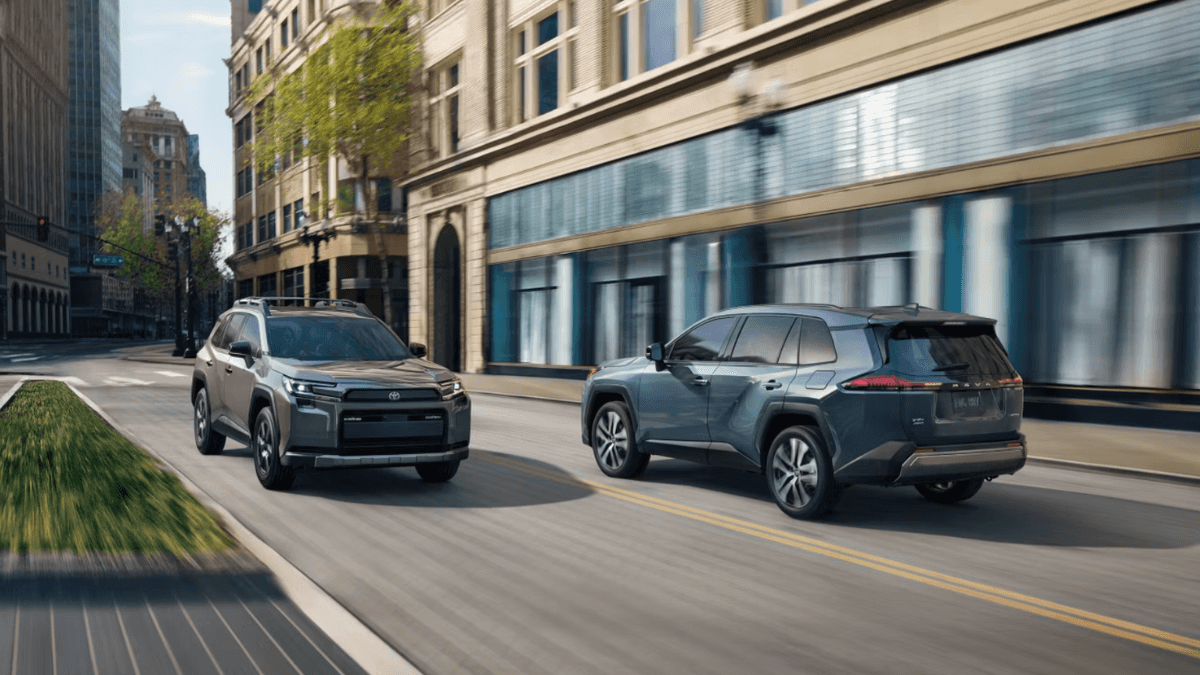
The 2026 Toyota RAV4 and 2026 Honda CR-V are two popular compact SUVs with different approaches to efficiency, power, and everyday versatility. The RAV4 is now offered with hybrid and plug-in hybrid powertrains, while the CR-V continues to offer both gas and hybrid options.
For drivers in Beaverton and throughout the Pacific Northwest, the differences that matter most may come down to fuel economy, available all-wheel drive, cargo space, towing capability, and the equipment included with each trim.
2026 Toyota RAV4 vs. 2026 Honda CR-V at a Glance
| Feature | 2026 Toyota RAV4 | 2026 Honda CR-V |
|---|---|---|
| Powertrain options | Hybrid and plug-in hybrid | Gas and hybrid |
| Seating | 5 passengers | 5 passengers |
| Available AWD | Yes | Yes |
| Maximum horsepower | Up to 320 hp on RAV4 Plug-in Hybrid | Up to 204 hp on CR-V Hybrid |
| Maximum towing capacity | Up to 3,500 lbs. | Up to 1,500 lbs. |
| Factory maintenance | ToyotaCare | Honda Service Pass on select models |
Specifications vary by trim and configuration.
What’s Different About the 2026 RAV4 and CR-V?
The biggest difference is their approach to electrification. The 2026 RAV4 lineup includes hybrid models throughout the range, along with plug-in hybrid options for shoppers looking for additional electric capability.
The 2026 Honda CR-V gives shoppers a choice between a conventional 1.5-liter turbocharged gas engine and a hybrid powertrain, depending on trim.
That makes the comparison less about one SUV being universally better and more about which configuration fits your driving habits. A commuter may place greater importance on hybrid fuel economy, while another driver may prefer the flexibility of a conventional gas powertrain.
Which SUV Has Better Fuel Economy?
Fuel economy is one of the most noticeable differences when comparing the hybrid versions of these two SUVs.
The 2026 Toyota RAV4 Hybrid LE FWD is rated at up to 47 city / 40 highway / 43 combined MPG, while the RAV4 Hybrid LE AWD is rated at up to 46 city / 39 highway / 42 combined MPG.
The 2026 Honda CR-V also offers hybrid models, with fuel economy varying according to trim and drivetrain. Its gas-powered configurations provide another option for shoppers who aren’t specifically looking for an electrified SUV.
For a daily commute around Beaverton, Hillsboro, or the greater Portland area, choosing a hybrid can help reduce fuel stops while retaining the versatility of a compact SUV.
If you’re ready to compare current Toyota models, you can browse new vehicle inventory at Beaverton Toyota.
How Do the RAV4 and CR-V Compare for Power and AWD?
Both SUVs offer available all-wheel drive, which can be useful for drivers who regularly deal with wet roads or travel toward the mountains.
The 2026 RAV4 Hybrid produces up to 236 horsepower on applicable configurations, with electric motors providing immediate torque. RAV4 Plug-in Hybrid models offer up to 320 horsepower, depending on configuration.
The 2026 Honda CR-V Hybrid produces up to 204 horsepower, while its 1.5-liter turbocharged gas engine produces 190 horsepower.
Power is only one part of the driving experience, however. The RAV4’s hybrid system combines its gasoline engine with electric motors, while the CR-V uses different powertrain configurations depending on the trim.
Which SUV Offers More Cargo and Towing Capability?
Both the RAV4 and CR-V are designed to handle everyday cargo, passengers, and weekend gear without moving into a larger SUV.
The RAV4 provides approximately 38 cubic feet of cargo space behind the second row on applicable hybrid configurations, with considerably more space available when the rear seats are folded.
Towing is another significant difference. Properly equipped 2026 RAV4 models can tow up to 3,500 pounds, while the 2026 CR-V has a maximum towing capacity of 1,500 pounds.
That additional capacity can matter if you’re hauling a small trailer, boat, or recreational equipment. If towing isn’t part of your routine, however, everyday cargo access and passenger space may be more important considerations.
What Technology and Safety Features Are Available?
Both SUVs offer modern driver-assistance and connectivity technology, although specific equipment varies by trim.
The 2026 RAV4 comes standard with Toyota Safety Sense 4.0, Toyota’s latest suite of active safety and driver-assistance features. Depending on configuration, the RAV4 includes technologies designed to assist with collision avoidance, lane positioning, adaptive cruise control, and driver awareness.
The RAV4 also includes ToyotaCare, providing factory-scheduled maintenance for the first 2 years or 25,000 miles, whichever comes first.
Honda equips the CR-V with its own Honda Sensing suite of driver-assistance technologies, with additional features varying by trim.
When comparing the two SUVs, it’s worth looking at the specific trims rather than assuming every RAV4 or CR-V includes the same equipment.
Which SUV Makes Sense for Pacific Northwest Driving?
Pacific Northwest driving can involve everything from wet weekday commutes to weekend trips into the Cascades, so different shoppers may prioritize different SUV features.
Available AWD can be useful for drivers who regularly encounter wet or changing road conditions. Hybrid powertrains can make sense for commuters focused on fuel efficiency, while higher towing capacity can be more important for drivers who regularly bring along recreational equipment.
The RAV4 offers hybrid powertrains, available AWD, and higher maximum towing capacity on appropriately equipped models. The CR-V provides the flexibility of both gas and hybrid powertrains and is similarly sized for everyday city and highway driving.
For shoppers around Beaverton and Hillsboro, the best comparison may ultimately come down to the specific RAV4 and CR-V trims that fit your priorities.
RAV4 vs. CR-V: Which One Is Right for Me?
The 2026 Toyota RAV4 and Honda CR-V take slightly different approaches to the compact SUV segment.
The RAV4 offers a lineup centered on electrified powertrains, available AWD configurations, and up to 3,500 pounds of towing capacity when properly equipped. The CR-V gives shoppers the choice between gas and hybrid powertrains while maintaining the practical size and versatility expected from a compact SUV.
If you’re comparing the two, start with the features that matter most to you: fuel economy, power, AWD, towing, cargo space, technology, or the equipment included with a particular trim.
Test Drive a RAV4 at our Toyota Dealer in Washington County, OR
If a Toyota is the right fit for your needs, you can explore new Toyota inventory and compare the models currently available at Beaverton Toyota. For additional ways to equip and maintain your Toyota, Beaverton Toyota’s parts department offers genuine Toyota parts and accessories.
Please contact us online with any questions.
FAQ
If you’re still comparing your options, you can also explore Beaverton Toyota’s pre-owned inventory or browse the certified pre-owned inventory.
0 comment(s) so far on 2026 Toyota RAV4 vs. 2026 Honda CR-V: Which SUV Rules the Pacific Northwest?